Inflated Lies

Inflated Lies

The Myth of Accurate Forecasting

Oh joy, let's talk about the geniuses who claim to predict the unpredictable. Economists, the self-proclaimed masters of the universe, have consistently shown us that they're about as reliable as a weather forecast from a Magic 8-Ball. Their track record is a laundry list of failures, with the 2008 crisis being the cherry on top of a sundae of incompetence. The assumption that complex systems like economies can be reduced to simplistic predictive models is laughable. It's like trying to predict the behavior of a swarm of bees using a Ouija board. Yet, these "experts" continue to peddle their wares, touting models that are about as useful as a chocolate teapot.
  • The failure to predict the 2008 crisis, which was apparently a "black swan" event (code for "we had no idea what we were doing")
  • The consistent overestimation of economic growth, because who needs reality when you have spreadsheets?
  • The inability to account for unforeseen events, like wars, natural disasters, or politicians opening their mouths
And let's not forget the role of unforeseen events and black swan occurrences in shaping economic outcomes. You know, the things that "experts" always seem to forget until it's too late. It's like they're trying to predict the outcome of a game of Jenga, without considering the fact that the whole thing might just come crashing down at any moment.
  • The 2001 dot-com bubble, where "experts" thought the party would never end (spoiler alert: it did)
  • The 2010 Flash Crash, where the market decided to take a wild ride, leaving "experts" scrambling to catch up
  • The ongoing COVID-19 pandemic, where "experts" are still trying to figure out what's going on (good luck with that)
But hey, who needs accuracy when you can just make stuff up and call it a prediction? The self-serving nature of economic predictions is a joke. It's all about reassuring investors and bolstering the status quo, rather than actually trying to understand what's going on.
  • The constant stream of "expert" opinions on TV, where pundits compete to see who can sound the most confident while being the most wrong
  • The "research" reports from banks and investment firms, which are about as unbiased as a politician's campaign promises
  • The endless parade of "gurus" and "thought leaders" who make a living peddling nonsense to gullible investors
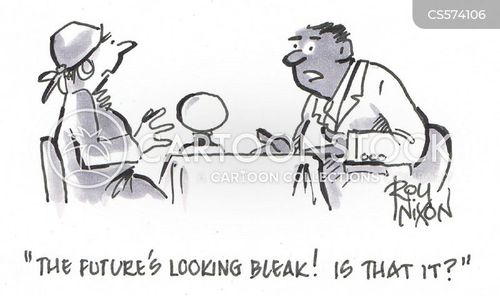
So, to all the gullible people out there who still think that economists can predict the future, let me give you a piece of advice: don't bet the farm on it. In fact, don't even bet a penny. Just take your money, put it in a sock drawer, and wait for the inevitable crash. At least then you'll have the comfort of knowing that you didn't waste your money on some "expert's" get-rich-quick scheme. And to the "experts" themselves, let me say: keep on pretending, keep on posturing, and keep on collecting your paychecks. Just don't say I didn't warn you when the whole house of cards comes crashing down. Again.
The Myth of Accurate Forecasting

Inflation: The Silent Killer of Savings

The sweet, sweet silence of inflation, quietly devouring your savings like a cancer. You'd think people would be up in arms, but no, they're too busy sipping lattes and pretending everything is fine. Meanwhile, their purchasing power is being slowly strangled. Let's take a look at the lovely ways inflation screws over those on fixed incomes:
  • Retirees watching their pension funds evaporate like magic, leaving them to choose between food and medication
  • Savers seeing their nest eggs shrink, all thanks to the "low unemployment" fairy tale peddled by central banks
  • The delightful phenomenon of "shrinkflation", where prices rise and quantities shrink, because who needs value for money anyway?
Gullible folks, still believing the "experts" who claim a little inflation is a good thing. Please, do tell us more about how 2% inflation is "healthy" while your savings account is being bled dry. The cruel joke of central banks prioritizing low unemployment over low inflation is a masterclass in gaslighting. They're essentially saying, "Hey, you've got a job, who cares if your money is worthless?" The irony is lost on the influencers and "thought leaders" who still parrot this nonsense. Real horror stories abound, like the 75-year-old woman who had to choose between paying rent or buying food because her pension couldn't keep up with inflation. But hey, at least she's got a job, right? The heartless dismissal of inflation's effects on the most vulnerable members of society is a national pastime. We've got "experts" claiming that inflation is "necessary" for economic growth, while ignoring the fact that it's essentially a tax on the poor and elderly. Statistical embarrassment anyone? How about the fact that, in the US, over 50% of retirees rely on Social Security for more than 50% of their income, and inflation is eroding that income at an alarming rate? But sure, let's keep pretending that everything is fine, and that the "market" will somehow magically fix itself. Pathetic.
Inflation: The Silent Killer of Savings

Interest Rates: A Tool for the Wealthy

The grand symphony of wealth concentration, conducted by the maestros of monetary policy. It's a beautiful thing, really - for the 1%. The rest of you are just along for the ride, paying the tab for the champagne toasts of the elite. Adjustments to interest rates are a masterclass in selective benevolence. They benefit the wealthy and large corporations, because who needs a level playing field, anyway? The little guy can just eat cake. Or, you know, struggle to make ends meet while the fat cats get fatter. Some highlights of this rigged game include:
  • The fact that low interest rates encourage reckless borrowing, because who cares about debt when you can just print more money?
  • The way this reckless borrowing further concentrates wealth, because the rich get richer and the poor get poorer - it's just basic math, folks.
  • The staggering lack of discussion about the long-term consequences of artificially suppressed interest rates, because who needs to think about the future when you can just live in the now?
And then, of course, there's the nauseating spectacle of central bankers and politicians congratulating themselves on their 'prudent' management of the economy. It's like watching a group of arsonists pat themselves on the back for putting out a fire they started in the first place. Gullible people eat this up, no doubt influenced by the "experts" who peddle this nonsense. Newsflash: if someone tells you that artificially suppressed interest rates are a good thing, they're either lying or stupid. Maybe both. Let's look at some real-life horror stories. Like the fact that the wealthiest 10% of Americans now hold over 70% of the country's wealth. Or the fact that the average American is now over $30,000 in debt. But hey, who needs personal financial responsibility when you can just blame the system, right? The system that's rigged against you, courtesy of the wealthy and large corporations who benefit from these "prudent" monetary policies. Some red flags to watch out for include:
  • Any "expert" who tells you that low interest rates are a good thing for the economy, without mentioning the caveat that it's only good for the wealthy and large corporations.
  • Any politician who claims to be a champion of the little guy, while simultaneously supporting policies that concentrate wealth among the elite.
  • Any central banker who uses the phrase "prudent management of the economy" without irony, because let's be real, they're just making it up as they go along.
Influencers and "experts" will try to sell you on the idea that this is all just part of the natural order of things. That the wealthy and large corporations deserve to benefit from these policies because they're just better at the game of life. But let's call a spade a spade: this is nothing more than a scam, a way to transfer wealth from the many to the few. And if you're not outraged, you're not paying attention.
Interest Rates: A Tool for the Wealthy

The Sham of Economic Expertise

The emperor has no clothes, and neither do the self-proclaimed economic "experts" who parade around, spewing nonsense and collecting paychecks. Their track record is a laughable joke, a never-ending stream of incorrect predictions and failed forecasts. They're like weathermen who can't tell you if it's raining outside, but will happily charge you for an umbrella. Let's take a look at some of the "luminaries" in this field:
  • Nouriel Roubini, who predicted 10 of the last 2 recessions, and still manages to get invited to conferences and sell books.
  • Peter Schiff, who has been predicting a dollar collapse for over a decade, and has a portfolio to match his failed predictions.
  • Paul Krugman, who has been wrong on everything from the housing bubble to Brexit, but still gets a column in the New York Times.
These are the "experts" that gullible people look up to, and it's a wonder anyone takes them seriously. The obfuscation of simple truths behind a veil of technical jargon is a favorite trick of these charlatans. They'll throw around terms like "macroprudential policy" and "fiscal multipliers" to sound smart, while ignoring the fact that they have no idea what they're talking about. It's like a bad game of Dungeons & Dragons, where the players make up rules as they go along and pretend to be experts. And then there's the nauseating self-promotion. These economic gurus will sell you anything: books, consulting services, speaking engagements. They'll even offer to manage your portfolio, for a small fee, of course. It's like they're selling snake oil, but instead of curing your ailments, they'll just drain your bank account.
  • The "experts" who sold subprime mortgage-backed securities, knowing they were toxic, and walked away with millions.
  • The "gurus" who promoted cryptocurrency, ignoring the obvious scams and Ponzi schemes, and lost their followers' life savings.
  • The "thought leaders" who advocated for austerity, ignoring the devastating consequences, and left entire countries in ruins.
These are the people who should be held accountable, but instead, they're still out there, peddling their nonsense and raking in the cash. The statistical embarrassment is staggering. These "experts" can't even get the basics right. They'll predict GDP growth, and miss it by a mile. They'll forecast interest rates, and get it completely wrong. It's like they're throwing darts at a board, blindfolded, and hoping to hit something. And yet, they still manage to convince people to listen to them, to follow their advice, and to hand over their hard-earned cash. It's time to stop pretending that these economic "experts" know what they're talking about. They don't. They're just a bunch of self-serving, narcissistic, and incompetent charlatans who are more interested in lining their own pockets than in telling the truth. So, the next time you hear some "expert" spouting nonsense, just remember: they're probably wrong, and they're definitely trying to sell you something.
The Sham of Economic Expertise

Frequently Asked Questions (FAQ)

Will the Bank of England raise interest rates to combat inflation?

How can I protect my savings from the effects of inflation?

What's the best way to invest my money during a period of rising inflation?

Post a Comment

Previous Post Next Post

Affiliate

Affiliate
