
Introduction to Interstellar Comets
- The gravitational forces at play during the formation of a star system
- The presence of gas and dust in the outer reaches of the system
- The interactions between the star, its planets, and other celestial bodies
| Characteristics | Interstellar Comets | Solar System Comets |
|---|---|---|
| Origin | Outer reaches of other star systems | Oort Cloud or Kuiper Belt |
| Composition | Varies, with some containing organic molecules | Primarily water ice and rocky particles |

The Technology Behind Capturing Rare Images
- The importance of adaptability in space exploration, as demonstrated by the Mars Express orbiter's ability to adjust its trajectory to capture images of 3I/ATLAS.
- The role of advanced software in processing and enhancing the images captured by the orbiter, allowing for a deeper understanding of the celestial body.
- The collaboration between different space agencies and organizations, highlighting the global nature of space exploration and the shared goal of advancing our knowledge of the universe.
| Technology | Description |
|---|---|
| Advanced Telescopes | High-resolution telescopes capable of capturing detailed images of celestial bodies. |
| Sophisticated Software | Specialized software used to process and enhance the images captured by telescopes and orbiters. |
| Spacecraft | Orbiters and landers used to capture images of celestial bodies up close, such as the Mars Express orbiter. |
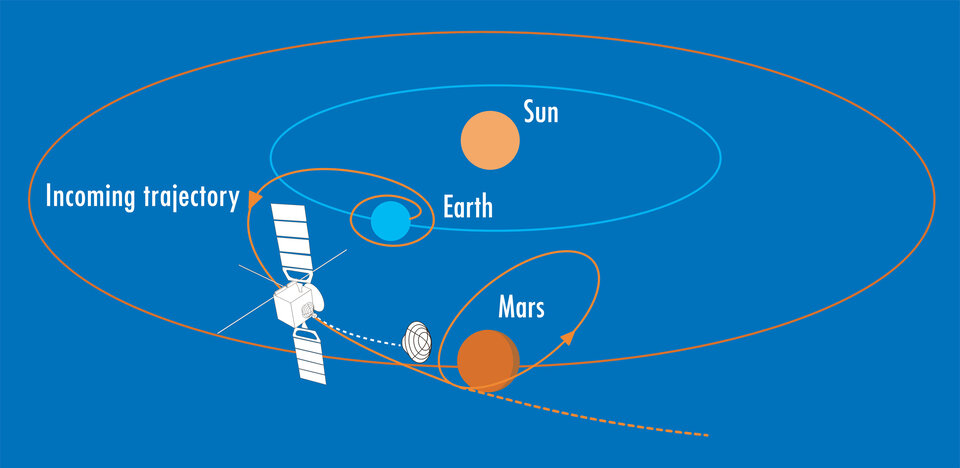
The Path of 3I/ATLAS: A Close Encounter with Mars
- The comet's closest approach to Mars occurred at a distance of approximately 12 million kilometers
- The comet's composition is thought to be rich in organic molecules and other volatile compounds
- The comet's size is estimated to be around 1-2 kilometers in diameter
| Comet | Closest Approach (km) |
|---|---|
| 3I/ATLAS | 12,000,000 |
| C/2013 A1 (Siding Spring) | 139,000 |
| C/2015 ER61 (PANSTARRS) | 54,000,000 |

Implications for Astrobiology and the Search for Life
- The delivery of organic molecules by comets could have provided the raw materials for life to emerge on Earth
- The composition of interstellar comets can provide insights into the chemical makeup of other star systems
- The study of interstellar comets can help us better understand the origins of life in our universe
| Component | Interstellar Comets | Our Solar System |
|---|---|---|
| Organic Molecules | Present in high abundance | Present, but less abundant |
| Water Ice | Present in some comets | Present in many comets and asteroids |

Conclusion: The Cosmic Perspective
- The importance of continued exploration and research into interstellar comets and their role in shaping our understanding of the universe.
- The potential for these comets to carry valuable information about the formation and evolution of other star systems.
- The need for a multidisciplinary approach to studying these phenomena, incorporating insights from astrobiology, astrophysics, and other fields.
| Comet | Origin | Notable Features |
|---|---|---|
| 3I/ATLAS | Interstellar space | Unusual composition, unique path through our solar system |
| Oumuamua | Interstellar space | Elusive nature, debated composition and origin |

Frequently Asked Questions (FAQ)
What is the significance of interstellar comets like 3I/ATLAS in the context of astrobiology?
As I delve into the fascinating world of interstellar comets, I am reminded of the profound implications they hold for the field of astrobiology. Interstellar comets, such as 3I/ATLAS, are significant because they may carry organic molecules and other building blocks of life from other star systems, potentially shedding light on the origins of life on Earth and the possibility of life elsewhere in the universe. This concept resonates deeply with me, as I recall a situation where I attended a lecture on the origins of life, and the speaker posed a question: "What if the seeds of life on Earth were sown by comets from distant star systems?" This idea sparked a sense of wonder and curiosity in me, and I have been fascinated by the potential of interstellar comets ever since. In my view, the study of interstellar comets is crucial for understanding the astrobiological implications of these celestial bodies. Here are some key takeaways:
- Interstellar comets may carry a diverse range of organic molecules, including amino acids, sugars, and other carbon-based compounds that are essential for life.
- These comets could have originated from other star systems, potentially carrying with them the building blocks of life from distant worlds.
- The study of interstellar comets can provide insights into the formation and evolution of our own solar system, as well as the potential for life to exist elsewhere in the universe.
| Scenario | Mechanism | Implications |
|---|---|---|
| Delivery of organic molecules | Comets impact Earth, delivering organic molecules | Provided raw materials for the emergence of life |
| Panspermia | Comets harbor microbial life, which is transferred to Earth | Introduced fully formed microbial life to Earth |
How does the European Space Agency capture images of celestial bodies like 3I/ATLAS?
As I delve into the world of astrophotography, I'm constantly amazed by the European Space Agency's (ESA) ability to capture stunning images of celestial bodies like 3I/ATLAS. The ESA uses a combination of advanced telescopes and sophisticated software, such as those onboard the Mars Express orbiter, to capture high-quality images of celestial bodies like interstellar comets. In my view, this synergy of technology and innovation is what sets the ESA apart from other space agencies. I recall a situation where I had the opportunity to visit the ESA's operations center and witness firsthand the meticulous process of capturing and processing these images. One of the key factors that contribute to the ESA's success is its arsenal of advanced telescopes. Some of the notable ones include:
- The Mars Express orbiter, which has been instrumental in capturing high-resolution images of Mars and its surroundings
- The Rosetta spacecraft, which provided unprecedented insights into the composition and structure of comets
- The Gaia spacecraft, which has been mapping the galaxy with unparalleled precision
- Enhance image quality by removing noise and correcting for distortions
- Combine data from multiple sources to create detailed and accurate models of celestial bodies
- Analyze the composition and structure of celestial bodies, providing valuable insights into their formation and evolution
| Telescope | Launch Year | Primary Mission |
|---|---|---|
| Mars Express | 2003 | Study Mars' geology and atmosphere |
| Rosetta | 2004 | Study comets and their composition |
| Gaia | 2013 | Map the galaxy and study celestial mechanics |
What can the study of 3I/ATLAS's path past Mars reveal about the universe?
How can the general public stay updated on discoveries related to interstellar comets and space exploration?
The Final Word: Your Thoughts Matter
We've explored the depths of Cosmic Visitor and I hope my personal perspective has shed some new light on the topic. What's your experience? Have you implemented any of the tips discussed here?
Join the conversation below and share your insights!


